
India is often viewed as an aggressive tax jurisdiction by domestic and overseas taxpayers, and making the charter as part of the Act may help restore confidence among taxpayers.

Reports suggested that stock market regulator, the Securities and Exchange Board of India (Sebi), is looking into the allegations of insider trading in the shares of Aptech, a computer training company in which Jhunjhunwala is a promoter. An email sent to Jhunjhunwala on the allegations did not immediately receive a response.

Net sales growth for the quarter ended December (Q3FY20) was 4.5 per cent on a year-on-year (YoY) basis for companies that have declared their results so far, compared to an 8.4 per cent rise in the first half of the financial year. This indicates that there could be a further rise in days' sales of inventory.
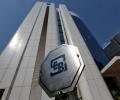
The regulator has asked portfolio managers not to leverage the portfolio of clients for investment in derivatives and not indulge in speculative transactions that are not accompanied by actual delivery, except for derivatives trades. This is done with the intention of reducing volatility in the market and curbing undue risks.

Last October's circular meant that downstream investment by such funds by way of subscription or acquisition of shares would have been considered "indirect foreign investment" if their investment manager or sponsor is owned or controlled by a non-resident. The finance ministry has now said that mutual funds that invest more than 50 per cent in equity shall be omitted from the Securities and Exchange Board of India (Mutual Funds) Regulations, 1996.

'Trading is about psychology; 75% of it is about keeping your emotions in check.'

The asset manager is yet to resolve the impasse surrounding the payment of pension to its erstwhile employees who had opted for voluntary retirement in 2003.

Recently listed companies scored 54, compared to 58 for the BSE100 firms and 61 for entities in the Sensex pack. The report noted that issues remain in IPO companies in which there seems to be a need to institutionalise governance practices.

Ghost beneficiaries aren't the only kind of issue companies face during a period of unprecedented CSR spending, touching nearly Rs 12,000 crore in 2018-19. Frauds related to procurement, construction, and end-use of funds have had companies engaging forensic auditors to keep tabs on how money is spent, revealed conversations with those involved in such investigations. Firms are also increasingly strengthening their own capabilities to better implement their programmes.

The biggest spend (Rs 4,406 crore) was for Schedule VII (II), which involves "promoting education, including special education and employment enhancing vocation skills, especially among children, women, elderly and the differently abled and livelihood enhancement projects". The FY19 spend was 17.2 per cent higher than Rs 1,0128.3 crore spent during the previous year.

Indian funds did better than Asian ones in only four of the 10 months -- till October. Despite much market optimism, presumably around policy interventions and guided by buoyant flows, India's macro backdrop may be turning for the worse.

Lower cost and easier termination may well be among the reasons that companies seek to have employees on contract. The share of employees on contract has increased to 57.3 per cent of the total workforce this year as compared to 53.7 per cent in the previous year.

The lack of a strong diversity policy on the part of companies, a limited pool of women candidates as well as socio-cultural factors contribute to their low numbers.
The financial services sector, including NBFCs and housing finance companies (HFCs), have historically been the largest borrowers from MFs.

Market watchers believe that the change in guidelines fly in the face of some of the recent initiatives taken by the government, such as easing norms for foreign portfolio investors.
While Rakesh Jhunjhunwala is up 14.9% during the year to Rs 12,381 cr, Ashish Dhawan is up 68.4% to Rs 810 cr, Ashish Kacholia is down 23.4% to Rs 515 cr, Rajiv and Dolly Khanna are down 74.6% to Rs 116 cr and Vijay Kedia is down 6.2% to Rs 294 cr.

This may mean easier access, simplified KYC and documentation requirements, and fewer investment restrictions for a majority of FPIs, especially broad-based funds and pooled vehicles that were earlier part of Category-II.

The biggest spender was Tata Motors, with Rs 4,224.6 crore assigned under the R&D head.

In the year to date, 61 PSUs have lost an average of 22 per cent, with five companies losing more than half their share value. The BSE PSU index is down 10.6 per cent.

Ninety-nine companies, which also include some unlisted ones, have more than Rs 100 crore each of minimum alternate tax credit on their books, cumulatively adding up to Rs 75,000 crore. By utilising MAT credit, many companies will be able to bring down their effective tax cost.
 © 2026 Rediff.com - Advertise with us - Disclaimer - Privacy Policy - Sitemap - Feedback - About us - Terms of use - Grievances